
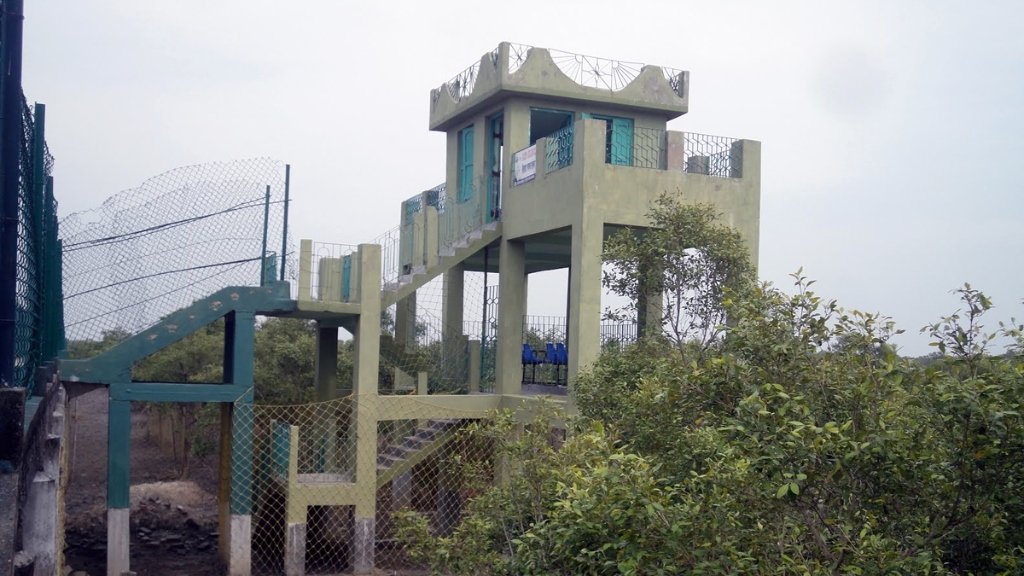
Sajnekhali Watch Tower
The Gateway to Sundarbans Wildlife — administrative nerve-centre of the Tiger Reserve, home to India's finest mangrove museum, sacred Bonobibi shrine, and a live crocodile hatchery with panoramic 360° wildlife views.
If There Is One Place Every Sundarban Traveller Must Visit — It Is Sajnekhali
If there is one place that almost every traveller visits during a Sundarban tour, it is the famous Sajnekhali Watch Tower. Known as one of the most popular destinations in the entire Sundarbans, Sajnekhali serves as the administrative headquarters of the Sundarban Tiger Reserve and the primary entry point for tourists venturing into the protected core zones.
Situated at the confluence of the Matla and Gomdi rivers, Sajnekhali offers something rare — a place where you can observe wildlife, learn about conservation, pray at an ancient shrine, and get your forest entry permits, all in one compact, beautifully maintained complex.
The three-tiered watchtower, built specifically for wildlife observation, looks over a freshwater pond that attracts animals year-round — making it one of the best spots in the entire Sundarbans for guaranteed animal sightings without venturing deep into restricted areas.
What You'll Find Here
- 3-tier watchtower with 360° wildlife views
- Freshwater pond — prime animal watering hole
- Mangrove Interpretation Centre (museum)
- Bonobibi Temple — sacred forest goddess shrine
- Live estuarine crocodile conservation pond
- Olive Ridley turtle breeding programme
- 200+ bird species in surrounding creeks
- Forest Department entry permit checkpoint
Four Reasons Sajnekhali Is Unmissable
More than just a watchtower — Sajnekhali is a complete wildlife destination packed into a single Forest Department compound.
Three-tiered panoramic wildlife observation deck
The Watch Tower
The iconic three-tiered watchtower at Sajnekhali is the most photographed structure in the Sundarbans. Standing at the tower's top level, visitors command a sweeping 360-degree view across tidal creeks, mangrove canopy, and open mudflats — the perfect vantage point for spotting spotted deer, wild boar, monitor lizards, and the occasional Royal Bengal Tiger drinking at the freshwater pond below.
India's finest mangrove ecology museum
Mangrove Interpretation Centre
The Mangrove Interpretation Centre inside Sajnekhali is an exceptional museum dedicated to the ecology of the Sundarbans delta. Through detailed exhibits, preserved specimens, and ecological models, visitors learn about the unique halophytic mangrove species, the tidal food chain, the role of pneumatophore roots, and the conservation challenges facing this UNESCO World Heritage Site.
Sacred shrine of the forest goddess
Bonobibi Temple
Bonobibi — the Forest Goddess — is the most revered deity of the Sundarban community. Before every honey-collecting expedition or fishing trip deep into the forest, locals worship at this temple seeking her protection against tigers and crocodiles. Visiting the Bonobibi shrine at Sajnekhali offers a rare glimpse into the spiritual relationship between the forest-dwelling communities and the wilderness they call home.
Live estuarine crocodile hatchery and Olive Ridley nursery
Crocodile & Turtle Pond
Adjacent to the watchtower complex, a protected freshwater pond houses live estuarine saltwater crocodiles in a semi-natural environment. The facility also serves as a breeding and conservation centre for Olive Ridley sea turtles, an endangered species that uses Sundarban beaches as nesting grounds. Guided naturalists explain crocodile behaviour and the conservation programme in detail.
Animals at the Watchtower
The freshwater pond below the Sajnekhali tower acts as a natural magnet for wildlife — especially during morning and late afternoon hours when animals come to drink.
Royal Bengal Tiger
Spotted drinking at the freshwater pond. Morning visits (6–8 AM) offer the highest probability of sightings from the watchtower.
Spotted Deer (Chital)
The most commonly sighted large mammal at Sajnekhali — herds of 10–30 deer regularly graze on the open grassland surrounding the watchtower.
Wild Boar
Frequently spotted rooting through the mudflats at low tide near the crocodile pond perimeter. Often seen in family groups.
Bengal Monitor Lizard
These impressive reptiles, reaching up to 1.5 metres, are commonly seen basking on the wooden walkways and mangrove root systems.
Estuarine Crocodile
Resident in the on-site conservation pond. Wild individuals are also spotted in the tidal channels visible from the watchtower.
Smooth-coated Otter
Playful family groups of otters are frequently spotted in the creeks around Sajnekhali, especially in the early morning.
Best Viewing Times
6:00 AM – 8:00 AM (dawn) and 4:00 PM – 6:00 PM (dusk) offer the highest probability of tiger sightings at the pond. Arrive early — patience is rewarded.
200+ Species at Your Binoculars
Sajnekhali is widely regarded as the best birdwatching location in the entire Sundarbans. The combination of tidal creeks, open mudflats, dense mangrove canopy, and the freshwater pond creates a mosaic of habitats that supports over 200 bird species.
Winter migrants from Central Asia and Siberia arrive between October and February, swelling the local bird population dramatically. The rare Masked Finfoot, the endemic Brown-winged Kingfisher, and the endangered Lesser Adjutant Stork are among the most sought-after sightings.
White-bellied Sea Eagle
Resident Raptor
Brahminy Kite
Resident Raptor
Lesser Adjutant Stork
Endangered Resident
Ruddy Kingfisher
Winter Migrant
Mangrove Pitta
Elusive Resident
Masked Finfoot
Critically Rare
Brown-winged Kingfisher
Sundarban Endemic
Collared Kingfisher
Abundant Resident
Black-capped Kingfisher
Winter Migrant
Sajnekhali, Gosaba
Sunrise view from the watchtower observation deck
Practical Guide to Sajnekhali
Getting There
From Kolkata, drive to Godkhali (approx. 3.5 hrs via NH12) and take a boat across the Vidyadhari river to Gosaba. From Gosaba, a short motorboat ride reaches Sajnekhali. All Go Sundarban Tour packages include AC Kolkata pickup and seamless boat transfers.
Entry & Permits
Sajnekhali is the primary Forest Department checkpoint where entry permits for the Sundarbans Tiger Reserve are verified. Permits for Indian nationals and foreign tourists differ in cost. All permits are pre-arranged for you as part of Go Sundarban Tour packages.
Best Time to Visit
October to March is ideal — cool, dry weather with excellent visibility. Arrive at Sajnekhali tower by 6:00 AM for dawn wildlife activity. Carry binoculars; the tower view is extraordinary at sunrise when deer and predators are most active.
Also nearby:
Sajnekhali is typically the first stop on every boat safari — followed by Sudhanyakhali, Dobanki Canopy Walk, and deep-core creek crossings toward Netidhopani.
Ready For Your Unforgettable Sundarban Safari?
Reserve your seats today with a minimal advance. Certified naturalist guides, luxury river vessels, and authentic Bengali feasts await you.