
Sundarban Tiger Reserve
The Untamed Kingdom of the Royal Bengal Tiger — the world's only tidal mangrove tiger reserve where big cats swim saltwater rivers, hunt on moonlit mudflats, and rule a forest unlike any other on Earth.
Where the Tiger Became a Creature of the Tides
The Sundarban Tiger Reserve is not simply a national park where tigers happen to live. It is a place where the Royal Bengal Tiger has been transformed by its environment — shaped over centuries into something the rest of the tiger world has never seen: a cat that swims saltwater rivers, navigates tidal forests, and survives conditions that would kill tigers elsewhere.
Declared a Project Tiger Reserve in 1973 and a UNESCO World Heritage Site in 1987, the Sundarban Tiger Reserve covers 2,585 square kilometres of protected tidal mangrove — the core zone where no permanent human settlement is permitted and the forest rules absolutely.
With over 100 wild tigers in the Indian Sundarbans alone, this is one of the highest-density tiger populations in the world — and the only one where every tiger is also a capable open-water swimmer.
Reserve Highlights
- 100+ Royal Bengal Tigers in Indian sector
- World's only saltwater-swimming tiger
- Sudhanyakhali — #1 tiger sighting spot
- Pirkhali — active tiger river crossing zone
- Netidhopani — highest tiger density zone
- 2,585 km² fully protected core reserve
- Project Tiger since 1973
- UNESCO World Heritage Site
Book a Tiger Safari
All packages include guided tiger reserve boat safari
Chat With Our GuideView Tour PackagesThe Four Great Tiger Zones
Each location within the Tiger Reserve offers a distinct tiger-watching opportunity — from guaranteed sightings at waterholes to rare swimming tiger encounters.
Sudhanyakhali
Sudhanyakhali is the single most famous tiger-watching location in all of India. The Forest Department maintains a freshwater pond at the base of a watchtower — and tigers arrive here almost daily to drink, especially in the dry winter months. A patient morning visit to Sudhanyakhali's observation deck is the best tiger-sighting opportunity on Earth outside a traditional game reserve.
Pirkhali Confluence
Pirkhali is where the Sundarbans tiger reveals its most extraordinary behaviour — swimming across wide tidal rivers. The confluence of multiple creeks at Pirkhali creates a natural tiger crossing zone where these apex predators navigate open water with powerful, effortless strokes. Boat safari sightings here of swimming tigers are among the rarest and most dramatic wildlife encounters in Asia.
Netidhopani
The most remote and wildlife-rich zone in the Indian Sundarbans. Netidhopani houses a centuries-old ruined temple surrounded by one of the highest tiger densities in the reserve. Accessible only on longer 2N/3D packages, this deep forest zone is where serious wildlife enthusiasts and photographers come for the full Sundarban tiger experience.
Dobanki Tiger Zone
The forest surrounding the Dobanki Canopy Walk is active tiger territory. Pugmarks are found regularly on the mudflats below the walkway. The combination of the elevated canopy walk and the adjacent creek safari makes Dobanki one of the most rewarding tiger-encounter zones — and the only place where you can observe the forest from above the tiger's own level.
Six Facts That Make This Tiger Unlike Any Other
The Royal Bengal Tiger of the Sundarbans has evolved behaviours found nowhere else among the world's 3,900+ remaining wild tigers.
The Only Saltwater Tiger
The Royal Bengal Tiger of the Sundarbans is the world's only tiger population that regularly swims in saltwater. They have been recorded crossing rivers up to 5 kilometres wide — a behaviour found nowhere else among big cats globally.
Tidal Territory
Unlike tigers in other reserves, Sundarbans tigers have territories that shift with the tides. As creek water levels rise and fall twice daily, tigers move their hunting grounds — making their behaviour uniquely dynamic and harder to predict.
The Mangrove Diet
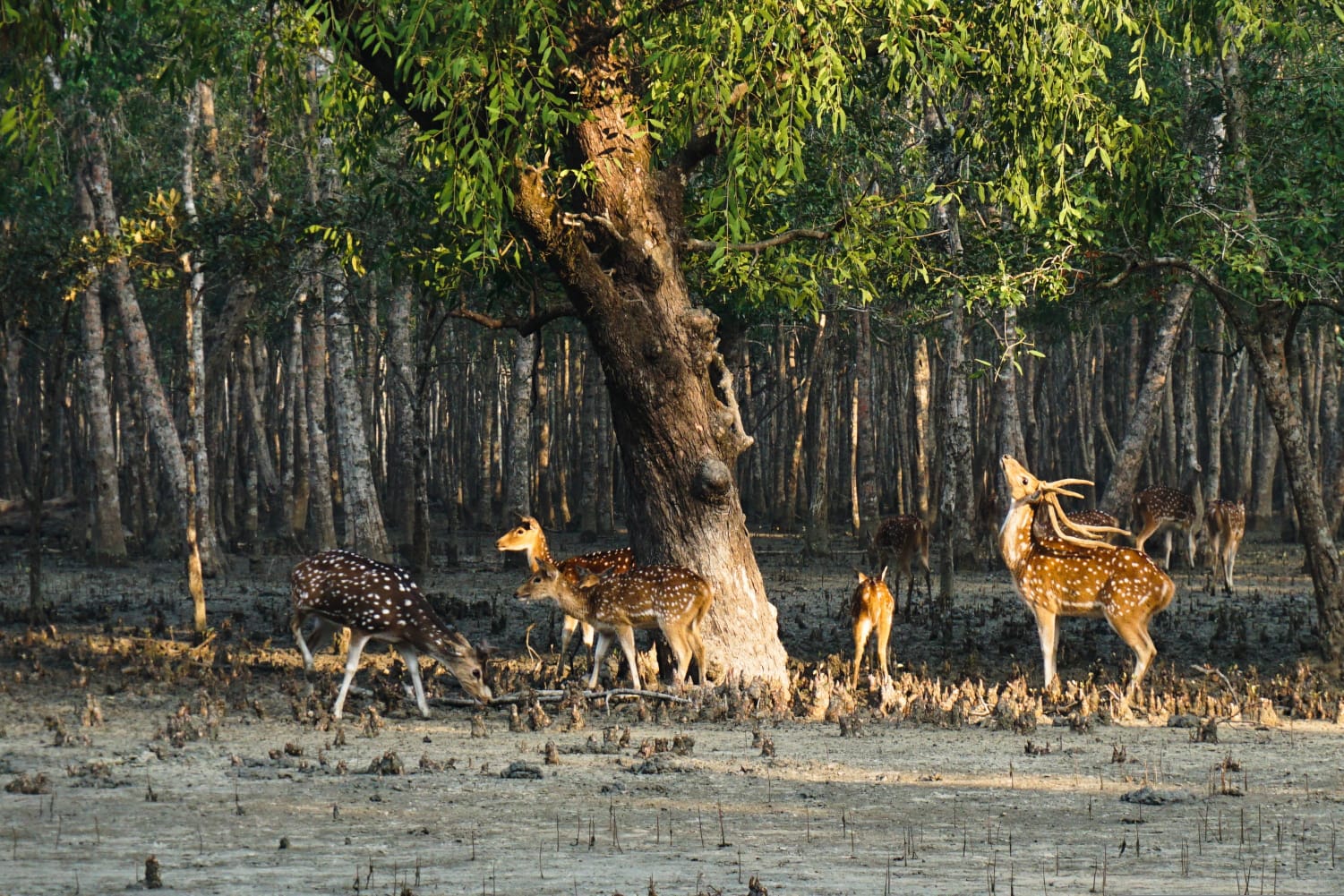
Sundarbans tigers prey primarily on spotted deer (chital), wild boar, and the occasional monitor lizard or fish. Their hunting technique involves ambushing prey at water's edge — using the tidal creek banks as a natural approach corridor.
Population & Census
The last official tiger census recorded 100+ tigers in the Indian Sundarbans alone, with an estimated 200+ across the India-Bangladesh delta. Camera trap studies suggest the population is slowly recovering under Project Tiger protection.
Salt Adaptation
Sundarbans tigers drink brackish tidal water — a physiological adaptation not seen in any other tiger subspecies. This salt tolerance has developed over generations of living exclusively in the tidal mangrove environment.
The Man-Eating History
Historically, Sundarbans tigers had one of the highest human conflict rates of any tiger population. Modern conservation management, forest guard training, and community awareness have significantly reduced incidents — but the mystique of the Sundarbans tiger remains one of wildlife's most compelling narratives.
Wildlife That Shares the Reserve
The tiger is the apex predator — but the Sundarban Tiger Reserve is a complete ecosystem where every species is interconnected. Here are the animals that coexist with the king of the Sundarbans.
Spotted Deer
Primary prey species, found in herds of 20–100 at forest edges
Estuarine Crocodile
Apex river predator, sharing creek territory with tigers
Wild Boar
Key tiger prey, rootling through mudflats at low tide
Irrawaddy Dolphin
Seen at river confluences, sharing the water with swimming tigers
Smooth-coated Otter
Family groups in tidal creeks — alert sentinels when tigers are near
White-bellied Sea Eagle
Nest-site indicator — eagles always know when a tiger is below
Important Safety Information
The Sundarban Tiger Reserve is a live, active tiger habitat. Visitors must remain in authorised boats or elevated observation structures at all times. Landing on reserve banks without Forest Department permission is strictly illegal and extremely dangerous. All Go Sundarban Tour safaris operate with fully trained naturalist guides who enforce Forest Department safety protocols.
Best Times for Tiger Sightings
Dawn — tigers most active; arriving at Sudhanyakhali pond at first light gives the highest sighting probability.
Dry season — water is scarce, forcing animals to the Forest Dept. freshwater ponds. Tiger sightings peak in February.
Tigers hunt and rest on exposed mudflats at low tide. Your naturalist tracks the tide schedule to position the boat optimally.
How to Enter the Tiger Reserve
Forest Dept. Permit
Entry into the Sundarban Tiger Reserve requires a permit issued by the West Bengal Forest Department. Separate permits exist for Indian nationals and foreign tourists. All permits are pre-arranged for you in every Go Sundarban Tour package.
Authorised Boat Only
You cannot walk, drive, or cycle into the Tiger Reserve. The only legal entry is by Forest Department authorised boat with a certified naturalist guide. Our motorised houseboats are fully compliant and permitted for core zone access.
Which Package Needed
Core zone tiger areas like Netidhopani require a minimum 2N/3D package. Sudhanyakhali and Pirkhali are accessible on 1N/2D packages. For the full tiger reserve experience, we recommend the 2N/3D or luxury package.
Ready For Your Unforgettable Sundarban Safari?
Reserve your seats today with a minimal advance. Certified naturalist guides, luxury river vessels, and authentic Bengali feasts await you.