
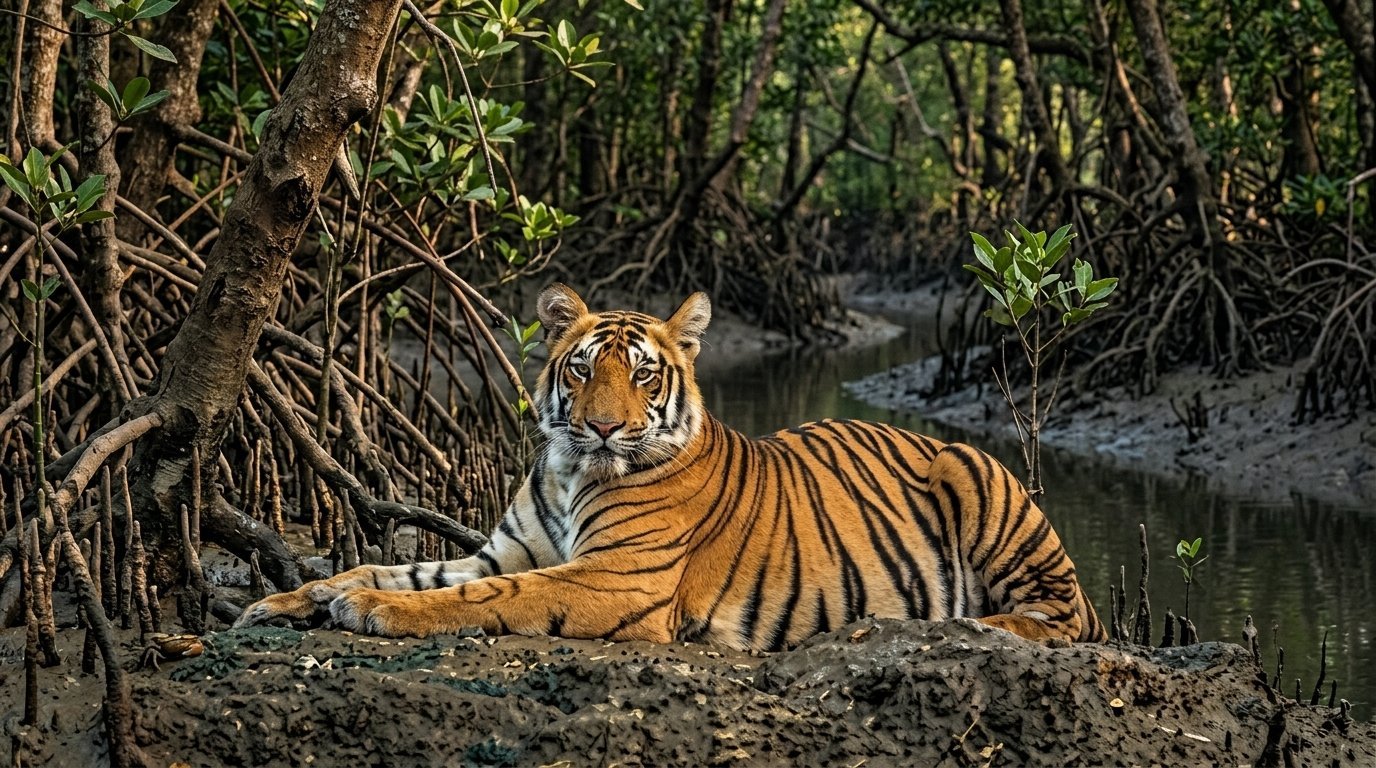
Sundarban Wildlife Sanctuary
Exploring the Rich Biodiversity of the World's Largest Mangrove Forest — a UNESCO World Heritage ecosystem where 260+ bird species, saltwater crocodiles, Irrawaddy dolphins and the Royal Bengal Tiger share a single tidal landscape.
Where Every Creek Holds a Different World
The Sundarban Wildlife Sanctuary is not one ecosystem — it is many ecosystems layered on top of each other in one extraordinary tidal landscape. From the mudflat feeding zones of the estuarine crocodile to the canopy hunting perches of the Brahminy Kite, from the creek-swimming route of the Royal Bengal Tiger to the root-cave nurseries of the Irrawaddy dolphin — the Sundarbans packs more biodiversity into each square kilometre than almost anywhere on Earth.
Designated a UNESCO World Heritage Site in 1987, the Sundarban Biosphere Reserve spans 10,000 square kilometres across India and Bangladesh — making it the world's largest mangrove forest. The Indian sector alone hosts over 260 bird species, 100+ wild tigers, 35+ mammal species, and 60+ true mangrove plant species.
A visit to the Sundarban Wildlife Sanctuary is not a tick-list exercise — it is an immersion into one of the planet's last truly wild places, where the rules of the forest apply and the animals have never been tamed.
Sanctuary Highlights
- World's largest mangrove forest ecosystem
- 100+ Royal Bengal Tigers (Indian sector)
- 260+ resident & migratory bird species
- Estuarine saltwater crocodile — world's largest reptile
- Irrawaddy & Ganges river dolphins
- Brown-winged Kingfisher — Sundarbans endemic
- Masked Finfoot — one of India's rarest waterbirds
- UNESCO World Heritage Site since 1987
Book a Wildlife Safari
All packages include guided wildlife sanctuary safaris
Chat With Our GuideView Tour PackagesThe Scale of Sundarban Biodiversity
Wildlife You May Encounter
The Sundarbans hosts one of the most diverse assemblages of wildlife on the Indian subcontinent — spread across mammals, reptiles and birds in every habitat from tidal creek to forest canopy.
Mammals
Royal Bengal Tiger
EndangeredPanthera tigris tigris
The apex predator of the delta — 100+ individuals roam the Indian sector, uniquely adapted to saltwater swimming and tidal hunting.
Spotted Deer (Chital)
Least ConcernAxis axis
Found in herds of 20–100, spotted deer are the tiger's primary prey and the most commonly sighted large mammal on every safari.
Wild Boar
Least ConcernSus scrofa
Rootle through mudflats at low tide in family groups. Highly alert animals that often signal the presence of a nearby tiger.
Smooth-coated Otter
VulnerableLutrogale perspicillata
Family groups of 4–10 play and hunt in tidal creeks. Their playful behaviour is a highlight of any boat safari.
Irrawaddy Dolphin
EndangeredOrcaella brevirostris
Seen at river confluences, these stocky, blunt-headed dolphins are one of the Sundarbans' most charismatic residents.
Ganges River Dolphin
EndangeredPlatanista gangetica
The near-blind Ganges river dolphin navigates by echolocation through murky tidal channels — a rare and special sighting.
Reptiles
Estuarine Crocodile
Least ConcernCrocodylus porosus
The largest living reptile — specimens over 5 metres have been recorded in the Sundarbans. They bask on mudflats at low tide and are a regular and unmistakable sighting.
Bengal Monitor Lizard
Least ConcernVaranus bengalensis
Up to 1.5 metres long, these confident lizards bask on mangrove roots and creek banks. Frequently seen from the Dobanki canopy walkway.
Indian Python
VulnerablePython molurus
Rarely seen but present throughout the reserve, Indian pythons hunt in the dense mangrove undergrowth and are occasionally spotted in tree branches at creek edges.
Water Monitor
Least ConcernVaranus salvator
Larger than the Bengal monitor and an accomplished swimmer — water monitors are frequently seen crossing tidal creeks between mangrove islands.
Birds
Brown-winged Kingfisher
Near ThreatenedPelargopsis amauroptera
Endemic to the Sundarbans and adjacent mangroves — this brilliantly coloured kingfisher is the signature bird of the reserve and the most sought-after sighting for birders.
Mangrove Pitta
Near ThreatenedPitta megarhyncha
Brilliantly coloured ground-dwelling bird found only in mangrove forest — heard calling from the undergrowth more often than seen.
White-bellied Sea Eagle
Least ConcernIcthyophaga leucogaster
Nests in tall mangrove trees above creek edges — an iconic raptor that circles high above the forest and dives dramatically for fish.
Lesser Adjutant Stork
VulnerableLeptoptilos javanicus
The large, ungainly lesser adjutant wades in tidal mudflats hunting fish and crabs. A globally threatened species with a significant Sundarbans population.
Brahminy Kite
Least ConcernHaliastur indus
The rust-and-white Brahminy kite is the symbol of the Sundarbans — seen on every boat safari patrolling creek edges for fish and carrion.
Masked Finfoot
EndangeredHeliopais personatus
One of the world's rarest waterbirds — the Sundarbans is one of the only places in India where the secretive masked finfoot can be reliably found.
Three Protection Zones
The Sundarbans uses a graduated protection model — the strictest conservation at the core, with carefully managed buffer zones where tourism and human activity are permitted under Forest Department supervision.
Core Zone
The fully protected inner sanctuary where no human habitation is permitted. Home to the highest tiger density, deepest mangrove forest, and most undisturbed wildlife. Boat safari access through Forest Dept. permit.
Buffer Zone
A transition zone surrounding the core, where limited and managed human activity is permitted. Boat safaris pass through this zone to access core area checkposts at Sajnekhali and Sudhanyakhali.
Transition Zone
The inhabited outer zone where forest villages and fishing communities coexist with the sanctuary. Human-wildlife conflict is managed here through Forest Department programmes.
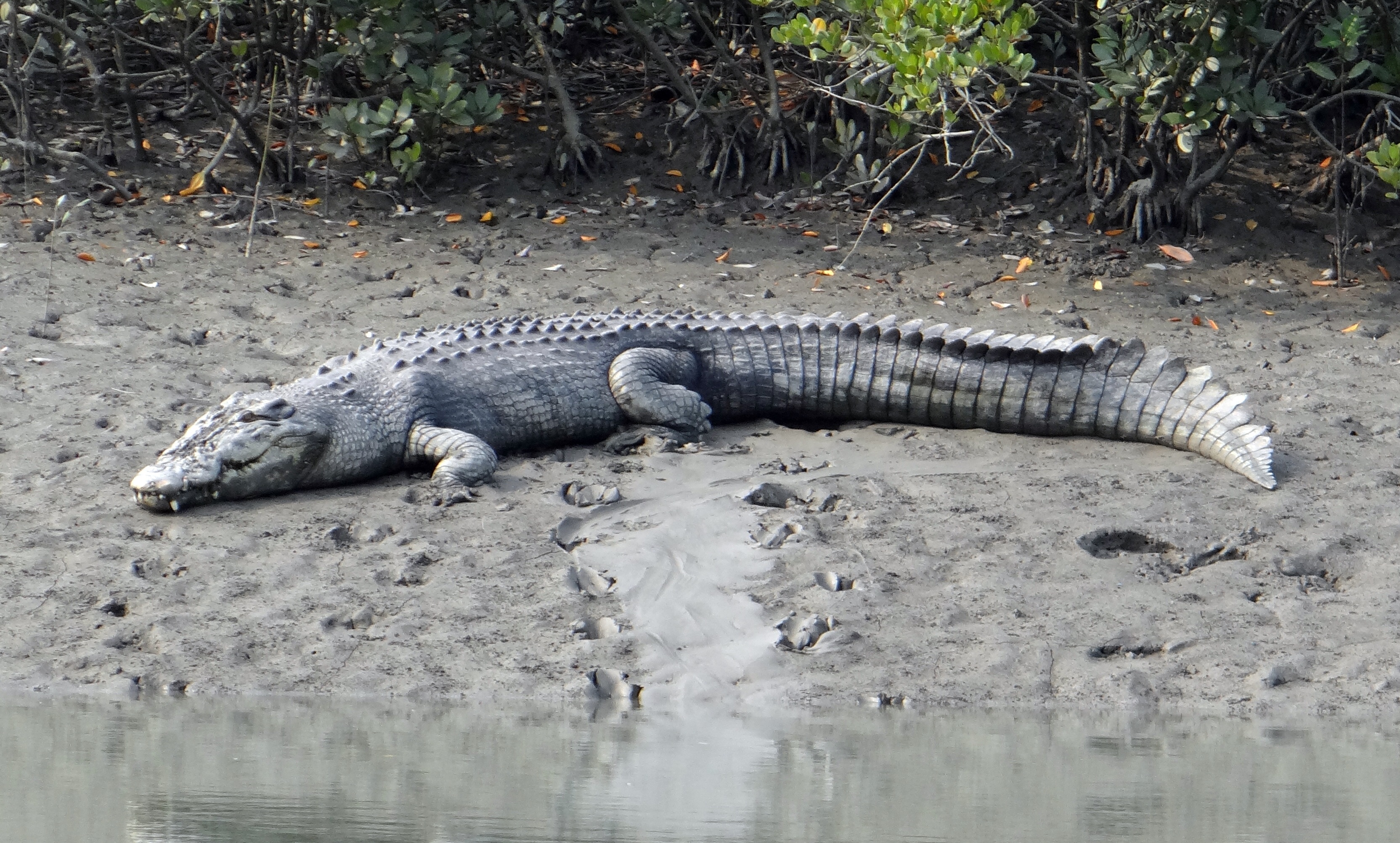
Photographed in Sundarbans
Estuarine Saltwater Crocodile — world's largest reptile
Best Times for Wildlife
Cool, dry weather — peak tiger activity, migrant birds arrive, crocodiles bask in winter sun.
Breeding plumage on resident birds — kingfishers and eagles at their most spectacular.
The most productive wildlife window of any day — animals are active, light is golden, the forest is fully alive.
Experience the Sundarbans Biodiversity
Every Go Sundarban Tour package includes guided wildlife sanctuary boat safaris with certified naturalists — the only way to legally explore this UNESCO heritage ecosystem.
Ready For Your Unforgettable Sundarban Safari?
Reserve your seats today with a minimal advance. Certified naturalist guides, luxury river vessels, and authentic Bengali feasts await you.